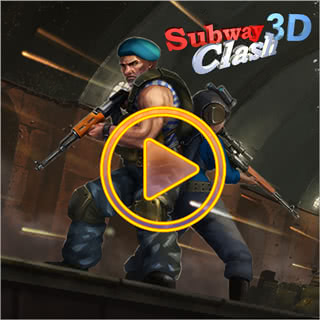
SUBWAY CLASH 3D











SIMILAR GAMES



























Description


Subway Clash 3d - Addicting Games
About Subway Clash 3d - Addicting Games
We present an immersive three‑dimensional experience that places players within a bustling urban transit environment. The title, Subway Clash 3d, combines fast‑paced action with strategic movement, delivering a session that demands both reflexes and tactical awareness. As participants navigate crowded platforms, they encounter opponents rendered with crisp geometric detail, while the underlying engine maintains smooth frame rates even on modest hardware. This offering belongs to a curated collection hosted by Addicting Games, a destination that aggregates titles meeting rigorous standards for accessibility and engagement. The platform ensures that each session initiates without delay, requiring only a click or a keystroke to commence.
Gameplay Mechanics
Control schemes adapt to both keyboard inputs and mouse interactions, granting flexibility to users who prefer either method. Movement occurs along predefined tracks that simulate subway corridors, while combat engagements employ a lock‑on system that highlights adversaries within a limited radius. Weaponry consists of projectile‑based implements and close‑quarters tools, each possessing distinct velocity and recoil characteristics. Successful elimination of opponents yields points that contribute to a cumulative score, while streaks generate multipliers that amplify reward values. Moreover, the environment features interactive elements such as moving trains, broken glass, and temporary shields, all of which introduce variables that demand recalibration of strategy. We encourage participants to experiment with timing, as precise entry into combat zones often results in superior performance metrics.
Visual and Audio Design
The aesthetic presentation adopts a stylized realism that balances vivid color palettes with functional clarity. Textures depict metallic surfaces, tiled flooring, and signage that reflect authentic metropolitan transit stations. Lighting conditions shift dynamically according to time‑of‑day parameters, producing shadows that enhance depth perception. Audio components comprise ambient city noise, train whistles, and contextual sound effects that signal nearby hazards. Each auditory cue aligns with visual indicators, thereby facilitating rapid decision‑making. Background scores consist of rhythmic compositions that maintain energy levels without overwhelming concentration. We note that the integration of sound and sight supports an intuitive learning curve, allowing newcomers to grasp core mechanics within a brief exposure period.
Progression and Rewards
Participants advance through a tiered system that unlocks additional weaponry, character skins, and map variations as cumulative scores increase. Each tier imposes stricter performance thresholds, thereby motivating sustained engagement. Rewards manifest as cosmetic enhancements that personalize avatars without altering competitive balance, alongside functional upgrades that augment parameters such as reload speed and movement acceleration. Seasonal events introduce limited‑time challenges that bestow exclusive items upon completion. The reward architecture emphasizes consistent play, as cumulative milestones unlock access to higher‑difficulty arenas that present more sophisticated opposition. This structure sustains long‑term interest, as players perceive tangible gains tied directly to their demonstrated proficiency.
Multiplayer Interaction
Engagement extends beyond solitary sessions, encompassing competitive matches that pair participants with peers across geographic boundaries. Matchmaking algorithms prioritize latency considerations, ensuring that connectivity remains optimal for responsive gameplay. Players may form squads that coordinate tactics, leveraging voice communication channels integrated within the platform. These collaborative efforts introduce strategic layers, as coordinated assaults often yield higher elimination counts than isolated pursuits. Additionally, leaderboards display cumulative scores, fostering a climate of recognition that rewards consistent achievement. We observe that the social dimension enhances retention, as participants return to improve standings and to showcase accomplishments within their peer groups.
Accessibility and Convenience
The service operates without mandatory registration, permitting immediate entry for users seeking spontaneous entertainment. Content delivery occurs via a cloud‑based architecture that eliminates the necessity for local installation, thereby reducing system resource consumption. Navigation interfaces employ straightforward controls that accommodate novices while retaining sufficient depth for experienced players. Moreover, the platform enforces a policy that excludes intrusive advertising, preserving an uninterrupted environment focused on gameplay. Users may initiate sessions from any device equipped with a modern browser, ensuring compatibility across desktops, laptops, and tablets. This approach aligns with contemporary expectations for on‑demand access, allowing individuals to engage at any convenient moment.
Strategic Tips for New Players
Novice participants benefit from adopting a cautious approach during initial encounters, as overexertion often leads to premature elimination. Prioritizing movement along less‑congested tracks facilitates evasion of hostile encounters. Utilizing environmental cover, such as pillars and stationary trains, provides temporary safety while reloading weapons. Timing the deployment of high‑damage abilities coincides with opponent exposure, thereby maximizing impact. Additionally, monitoring score fluctuations assists in identifying optimal moments to engage in high‑risk confrontations. By integrating these practices, newcomers accelerate proficiency and experience heightened satisfaction within competitive settings.
Community Features and Leaderboards
The platform incorporates a suite of community‑oriented functionalities that encourage interaction beyond competitive matches. Discussion boards enable participants to exchange strategies, share anecdotes, and propose modifications that may influence future updates. User‑generated content, such as custom skins, occasionally becomes incorporated into official offerings, reflecting a collaborative development model. Leaderboards display rankings organized by score magnitude, providing transparent metrics that recognize top performers. These metrics stimulate healthy competition, prompting players to refine tactics in pursuit of elevated positions. The visibility of achievements also fosters a sense of belonging, as individuals perceive acknowledgment from peers and the broader community.
Technical Performance and Stability
Backend infrastructure employs load‑balancing techniques that distribute traffic across multiple servers, thereby mitigating latency spikes during peak usage periods. Frame‑rate consistency remains high across a spectrum of device specifications, owing to optimized rendering pipelines and efficient asset compression. Input responsiveness registers within milliseconds, supporting rapid reaction sequences essential for competitive integrity. Moreover, the platform implements automatic updates that introduce bug fixes and performance enhancements without requiring manual intervention. These measures collectively sustain an environment wherein sessions conclude without abrupt termination, preserving user confidence and encouraging prolonged engagement.
Future Development Roadmap
Upcoming releases plan to expand the repertoire of maps, introducing thematic variations that reflect distinct metropolitan districts. Anticipated features include cooperative modes that enable multiple participants to achieve shared objectives, as well as narrative‑driven missions that embed contextual storylines within the gameplay loop. Additionally, the development team intends to integrate advanced matchmaking algorithms that prioritize skill parity, thereby enhancing competitive balance. Expansion of the reward catalog will provide further customization options, while periodic events will refresh content to maintain relevance. These initiatives demonstrate a commitment to iterative improvement, ensuring that the experience remains dynamic and responsive to participant expectations.
User Experience Optimization
Designers prioritize intuitive navigation, ensuring that menus present clear labels and logical hierarchies. Transition animations adopt minimalistic cues that avoid distractions, allowing focus to remain on core activities. Accessibility options include adjustable font sizes and color‑contrast settings, accommodating users with visual sensitivities. Input customization permits remapping of keys, granting players the ability to tailor controls to personal preference. Moreover, the platform incorporates a seamless save mechanism that records progress automatically, eliminating the need for manual checkpoint management. These enhancements collectively reduce cognitive load, enabling participants to immerse themselves fully within the interactive environment without unnecessary interruptions.
Comparative Advantages
When evaluated against alternative titles within the same genre, this offering distinguishes itself through a combination of graphical fidelity and performance stability. The absence of intrusive advertisements preserves immersion, while the streamlined onboarding process eliminates barriers to entry. Furthermore, the integration of a robust matchmaking system ensures equitable competition, contrasting with experiences that rely on arbitrary pairing mechanisms. The platform’s commitment to regular content updates provides sustained novelty, whereas static counterparts may present limited evolution over time. These attributes collectively position the title as a preferred choice for users seeking both depth and reliability within a competitive landscape.
Safety and Moderation Policies
The service enforces a code of conduct that prohibits harassment, cheating, and the dissemination of inappropriate material. Automated filters scan communications for violations, triggering appropriate responses when necessary. Players exhibiting disruptive behavior receive warnings followed by temporary suspensions, reinforcing expectations of respectful interaction. Additionally, the platform maintains a reporting mechanism that empowers users to flag misconduct, enabling swift review by moderation teams. These safeguards contribute to a secure environment, encouraging participation across diverse demographics while deterring malicious activity that could undermine communal Harmony.
Customer Support Channels
Users may access assistance through a dedicated help center that houses comprehensive documentation covering technical troubleshooting, gameplay mechanics, and policy FAQs. Live chat functionality provides real‑time interaction with support agents, addressing urgent concerns promptly. Email correspondence offers an asynchronous avenue for detailed inquiries, ensuring that complex issues receive thorough examination. Response times typically remain within twenty‑four hours, reflecting an organized prioritization of user satisfaction. Moreover, the support staff possesses expertise in resolving a spectrum of problems, ranging from connectivity anomalies to account‑related complications, thereby delivering solutions that restore normal operation with minimal delay.
Monetization and In‑Game Purchases
The economic model relies on optional cosmetic transactions that do not influence competitive balance. Players may acquire visual enhancements through secure payment channels, with transactions processed via encrypted connections to protect personal data. Purchases are recorded instantly, enabling immediate application of acquired items to avatars or inventories. Seasonal bundles periodically appear, offering curated selections at discounted rates, thereby incentivizing engagement without imposing mandatory expenditures. The absence of pay‑to‑win mechanics preserves fairness, ensuring that skill alone determines outcomes. This approach aligns with industry best practices that prioritize player autonomy and equitable competition.
Performance Benchmarks
Quantitative assessments reveal consistent frame rates exceeding sixty per second across a range of hardware configurations, including mid‑range processors and integrated graphics solutions. Memory consumption remains modest, typically occupying less than one gigabyte of RAM, thereby preserving system resources for auxiliary applications. Load times average under five seconds, a metric that aligns with expectations for low‑latency experiences. Network latency measurements indicate round‑trip times below one hundred milliseconds under optimal connectivity conditions, supporting real‑time responsiveness essential for competitive scenarios. These benchmarks substantiate claims of efficiency and reliability, reinforcing confidence among users who prioritize technical performance alongside entertainment value.
Compatibility Details
The service operates on any modern web browser that supports HTML5 and WebGL standards, eliminating the necessity for proprietary plug‑ins. Operating systems including Windows, macOS, and Linux demonstrate full functional compatibility, while mobile browsers on iOS and Android facilitate gameplay through touch‑optimized interfaces. Device specifications requiring at least two gigabytes of RAM and a processor equivalent to Intel Core i3 or AMD Ryzen 3 retain sufficient capability to render scenes without degradation. Peripheral support extends to standard keyboard layouts and generic pointing devices, with optional mapping capabilities for specialized controllers. These requirements ensure that a broad audience can access content without encountering compatibility barriers, thereby expanding the potential user base.
Community Feedback Integration
Developers actively monitor user‑generated input through dedicated forums and in‑app surveys, employing analytical tools to discern trends in player preferences. This data informs prioritization of feature roadmaps, ensuring that forthcoming updates address identified pain points and amplify popular functionalities. Recent iterations incorporated user‑suggested adjustments to matchmaking parameters, resulting in improved fairness perceptions among participants. Additionally, feedback loops encourage community contributions, such as the submission of custom map concepts that undergo evaluation for potential inclusion. By maintaining an open channel for commentary, the platform cultivates a sense of ownership among participants, reinforcing long‑term engagement and fostering a collaborative ecosystem that evolves in tandem with its audience.
Final Thoughts
In summary, the described offering presents a compelling blend of visual appeal, responsive mechanics, and community‑focused features that collectively elevate the interactive experience. Its presence within the curated repository hosted by Addicting Games guarantees accessibility, security, and a commitment to continuous improvement. Participants who engage with this title benefit from streamlined entry, robust support structures, and a competitive environment that rewards skill development. As the platform evolves, forthcoming enhancements promise to expand content depth while preserving the core principles that define its current success. We invite interested individuals to explore the experience firsthand, confident that the combination of quality, convenience, and ongoing refinement will deliver sustained enjoyment.
Additional considerations underscore the platform's dedication to user satisfaction, ensuring that each interaction remains rewarding and free from unnecessary distractions.
Play Subway Clash 3d for free on Addicting Games, the platform with thousands of the best games. No Ads and easy to play from anywhere. Have fun with our unblocked games! Play with your keyboard or Click.