SPIDER SOLITAIRE














SIMILAR GAMES


























Description


Spider Solitaire - Addicting Games
About Spider Solitaire - Addicting Games
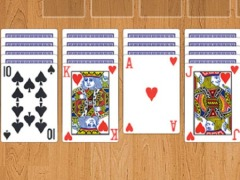
Spider Solitaire represents a timeless card entertainment that blends strategic depth with the unpredictable nature of chance. The core objective revolves around constructing descending sequences of cards from King down to Ace within each column of the tableau. Once a complete sequence is assembled, it automatically disappears, thereby liberating space for further planning. This mechanic encourages players to think several steps ahead, anticipating how each move influences the overall board configuration. As we progress, the interplay of luck and skill becomes increasingly pronounced, demanding both careful observation and decisive action. The game’s enduring appeal lies in its capacity to challenge our analytical faculties while providing a satisfying sense of accomplishment when a complex tableau is cleared in minimal moves.
Fundamental Rules and Setup
When we launch Spider Solitaire, eight tableau columns are presented, each initially populated with a randomized assortment of cards. The topmost card in each column is face‑up, while the remainder remain hidden until uncovered. Ten additional cards form the stockpile, which can be drawn in groups of ten to replenish the tableau when no further moves are possible. Our task is to move cards between columns, adhering to the rule that only a descending sequence of the same suit may be placed atop a higher card. When a full suit sequence from King to Ace is completed, it is automatically removed from play, bringing us closer to the ultimate goal of clearing the entire board.
Why The Game Captivates Players
The fascination with Spider Solitaire stems from its elegant balance of simplicity and complexity. On the surface, the rules are straightforward: arrange suits in descending order and eliminate complete sequences. Yet beneath this simplicity lies a rich lattice of possibilities, where each decision ripples through the entire tableau. We are compelled to evaluate not only the immediate benefits of a move but also its long‑term impact on future options. This dynamic creates a continuous loop of assessment, planning, and execution that keeps us engaged session after session. Moreover, the visual satisfaction of watching a cascade of cards disappear reinforces the reward loop, encouraging repeat play.
Strategic Planning in Real‑Time
Successful Spider Solitaire gameplay hinges on proactive planning. Rather than reacting to the current layout, we must anticipate how each placement will affect subsequent opportunities. For instance, exposing a hidden card may open a pathway to a desirable suit, but it may also create an unnecessary barrier in another column. By mapping out potential sequences before making a move, we can minimize wasted actions and preserve flexibility. This foresight is especially critical when dealing with the later stages of the game, where the remaining cards are fewer and each decision carries greater weight.
Managing the Tableau Effectively
Our approach to managing the tableau should prioritize clearing as many columns as possible early in the game. Empty columns serve as valuable reservoirs for temporary storage, allowing us to reposition cards without disrupting existing sequences. However, creating an empty column prematurely can also limit our options if no suitable cards are available to fill it later. Therefore, we must weigh the benefits of freeing a column against the risk of limiting future moves. A disciplined strategy often involves reserving empty columns for moments when a strategic relocation could unlock a crucial suit progression.
Optimizing Moves for Minimal Turns
The notion of “minimal moves” is not merely a quantitative metric; it is a reflection of efficient decision‑making. Each move should ideally achieve multiple objectives: uncover hidden cards, progress toward suit completion, and preserve future flexibility. When we prioritize moves that simultaneously advance several goals, we reduce the total number of actions required to clear the board. This efficiency translates into higher scores and a more satisfying experience, as the game rewards cleverness over brute force. Consequently, mastering the art of move optimization becomes a hallmark of advanced Spider Solitaire play.
Advanced Strategies for Consistent Success
Having established a solid foundation, we can delve into more sophisticated strategies that separate casual players from seasoned competitors. These techniques demand a deeper understanding of card distribution patterns and the psychological aspects of decision‑making under uncertainty.
Prioritizing Suits Based on Availability
One effective tactic involves focusing on the suit that appears most frequently in the current tableau. By targeting that suit first, we increase the likelihood of completing a sequence quickly, thereby freeing up space for other suits. This prioritization is dynamic; as the game evolves, the dominant suit may shift, requiring us to adapt our focus accordingly. Maintaining awareness of suit prevalence allows us to allocate our efforts where they will yield the greatest payoff.
Leveraging the Stockpile Strategically
The stockpile serves as a reservoir of additional cards that can revitalize a stagnant board. However, drawing from it indiscriminately can introduce unwanted complications. Instead, we should reserve stockpile draws for moments when no further moves are viable within the tableau. By timing these draws judiciously, we can introduce fresh options that break deadlocks and re‑energize our strategic planning. This disciplined use of the stockpile maximizes its utility while minimizing unnecessary disruptions.
Maintaining Flexibility in Column Arrangement
Flexibility is a cornerstone of effective Spider Solitaire strategy. Rigidly adhering to a predetermined pattern of moves can lead to dead ends when the board’s configuration changes unexpectedly. Instead, we should cultivate a mindset that welcomes alternative arrangements, even if they deviate from initial plans. This adaptability enables us to respond to new opportunities as they arise, ensuring that we can always progress toward clearing the tableau.
Evaluating Risk Versus Reward
Every move carries an implicit risk: it may unlock valuable cards or it may obstruct future pathways. By systematically evaluating the potential outcomes of each option, we can make informed decisions that balance short‑term gains with long‑term viability. This risk assessment often involves visualizing the resulting board state and determining whether the anticipated benefits outweigh the possible drawbacks. Such analytical rigor transforms casual play into a cerebral exercise that sharpens our strategic acumen.
Enhancing Cognitive Skills Through Play
Engaging with Spider Solitaire offers more than mere entertainment; it acts as a catalyst for cognitive development. The game demands sustained attention, pattern recognition, and logical reasoning, all of which contribute to mental agility. As we navigate complex layouts, we exercise our working memory by tracking multiple potential sequences simultaneously. This mental workout fosters improved concentration and the ability to process information efficiently, skills that extend beyond the gaming environment.
Pattern Recognition and Memory Enhancement
Repeated exposure to varied card configurations sharpens our ability to detect recurring patterns. Over time, we become adept at identifying common arrangements, such as the positioning of low‑value cards relative to high‑value ones. This heightened pattern recognition reduces the cognitive load required to evaluate each move, allowing us to make faster, more accurate decisions. Consequently, our memory retention improves as we learn to store and retrieve relevant board states without exhaustive recalculation.
Logical Sequencing and Problem Solving
The process of building descending sequences mirrors the steps involved in solving intricate puzzles. Each move necessitates a logical progression that aligns with the overarching goal of clearing the board. By practicing this form of structured problem solving, we refine our capacity to break down complex challenges into manageable components. This skill translates to real‑world scenarios where strategic planning and execution are essential, such as project management or analytical tasks.
Conclusion
Spider Solitaire on Addicting Games delivers a richly layered experience that rewards strategic foresight, meticulous planning, and adaptable thinking. Through careful management of the tableau, judicious use of the stockpile, and continual evaluation of risk versus reward, we can master the game’s challenges and achieve consistent success. Beyond the intrinsic satisfaction of clearing a difficult layout, the game serves as a valuable tool for enhancing cognitive abilities, sharpening memory, and honing analytical skills. As we continue to explore its depths, the blend of luck and strategy ensures that each session remains fresh, engaging, and intellectually stimulating.
Spider Solitaire, a classic card game, challenges players to arrange a deck of cards in order using minimal moves. The objective is to create descending sequences from King to Ace within the tableau columns. Once a sequence is completed, it is automatically removed from the tableau, the goal being to clear all cards. The game is renowned for its ability to combine both luck and strategy, giving players the chance to plan their moves ahead and adapt their strategy based on the situation of the cards.
Refine Skills with Varied Difficulties
Spider Solitaire offers varying levels of difficulty by providing one, two, or four suits to play with, which adjusts the complexity and strategy required to win. Beginners might start with the one-suit game to grasp the basic mechanics, while more experienced players can challenge themselves with the four-suit version, which requires more strategic planning and foresight. This versatility makes Spider Solitaire an enduring favorite among solitaire games, appealing to both casual players looking for a relaxing pastime and more competitive players seeking a mental exercise.