
RUN 2


SIMILAR GAMES












Description


Run 2 - Addicting Games
About Run 2 - Addicting Games
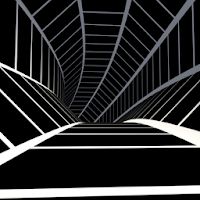
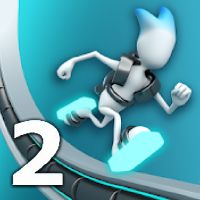
We explore the core experience that defines Run 2 on the Addicting Games platform. The title transports players into a stark, three‑dimensional void where a swift avatar must continuously navigate a series of suspended platforms. Each segment demands rapid reflexes, precise timing, and an instinctive grasp of gravity‑shift mechanics. Progress is measured not by a linear storyline but by the escalating complexity of spatial arrangements that appear as the game advances.
Gameplay Mechanics
We observe that the fundamental loop of Run 2 revolves around three primary actions: forward momentum, directional jumps, and gravity inversions. The character moves automatically along the x‑axis, while the player controls lateral movement and the ability to flip the gravitational pull. By toggling gravity, the avatar can run on walls or ceilings, effectively turning the void into a multi‑axis playground.
Key components of the mechanic set include:
- Speed escalation: As levels progress, the velocity of the avatar increases, compressing the window for reaction.
- Platform variety: New shapes—triangular spikes, narrow bars, rotating rings—introduce fresh obstacles that require adaptive navigation.
- Gravity toggling: Each press of the jump button inverts the pull, allowing the player to transition between floor, wall, and ceiling without breaking momentum.
We emphasize that mastering these mechanics is essential for achieving high scores, as the scoring system rewards longer survival times and fewer falls.
Progression and Level Design
We note that Run 2 eschews traditional level brackets in favor of an endless corridor that gradually morphs in structure. Early sections present simple rectangular platforms spaced at regular intervals, allowing newcomers to acclimate to movement controls. Subsequent segments introduce staggered arrangements, requiring the player to anticipate gaps and adjust gravity at precise moments.
Design patterns observed include:
- Rotational symmetry: Platforms are positioned to form repeating geometric motifs, encouraging players to develop a mental map of upcoming challenges.
- Dynamic scaling: The size and height of obstacles increase proportionally with speed, maintaining a consistent difficulty curve.
- Randomized seeding: While the overall progression is deterministic, subtle variations in platform placement ensure replayability.
Our analysis confirms that this design philosophy sustains engagement by balancing predictability with surprise, compelling players to refine their timing and spatial awareness.
Visual and Audio Aesthetic
We describe the visual language of Run 2 as minimalist yet immersive. The environment is rendered in monochrome tones, with stark contrasts highlighting the silhouette of the avatar against the endless abyss. Lighting effects are limited to subtle glows that accentuate the edges of each platform, reinforcing depth perception in a three‑dimensional space.
The auditory backdrop complements the visual restraint through a synth‑driven soundtrack that escalates in intensity as speed rises. Each successful gravity reversal is accompanied by a crisp auditory cue, providing immediate feedback that aids in timing-sensitive maneuvers.
Strategic Mastery
We outline a set of strategies that enable players to extend their runs and achieve higher scores. These approaches are grounded in an understanding of the game’s underlying physics and pattern recognition.
- Anticipatory gravity flips: Rather than reacting after a fall, seasoned players pre‑emptively invert gravity just before reaching a gap, ensuring uninterrupted forward motion.
- Consistent lateral pacing: Maintaining a steady left‑right oscillation minimizes unnecessary adjustments, preserving kinetic energy.
- Pattern memorization: By internalizing recurring platform sequences, players can predict placement and execute precise jumps without hesitation.
We stress that effective execution of these tactics transforms the experience from reflex‑driven to strategically nuanced, elevating the player’s overall performance.
Community and Competitive Aspects
We observe that Run 2 fosters a competitive environment through publicly displayed leaderboards. Players worldwide strive to surpass each other’s survival times, creating a dynamic ecosystem of shared tactics and incremental improvements. The absence of multiplayer components shifts the focus inward, encouraging individual skill refinement rather than cooperative play.
Forums associated with the game often feature discussion threads dissecting optimal jump intervals, gravity‑flip frequencies, and analysis of platform density. Such discourse underscores the depth of strategic thought that the title inspires among its audience.
Accessibility and Platform Availability
We note that Run 2 is accessible directly through web browsers, requiring no additional downloads or installations. This ease of entry broadens its reach, allowing casual players to experiment while dedicated enthusiasts can engage in prolonged sessions. The game’s lightweight design ensures smooth performance across a range of hardware specifications, preserving responsiveness even during peak speed phases.
Future Prospects and Evolution
We anticipate that ongoing player feedback will guide potential updates to the Run 2 experience. Possible enhancements include:
- Introducing new visual themes that retain the minimalist aesthetic while adding color palettes.
- Expanding the repertoire of platform types to test advanced spatial reasoning.
- Implementing adjustable difficulty presets to accommodate varying skill levels.
These prospective refinements aim to preserve the core tension that defines the title while offering fresh challenges for veteran players.
Conclusion
We synthesize our findings by reaffirming that Run 2 - Addicting Games represents a sophisticated evolution of the endless‑runner genre. By embedding three‑dimensional navigation, gravity manipulation, and escalating difficulty within a streamlined visual and auditory framework, the game delivers a compelling test of reflexes and strategic foresight. Mastery emerges from a blend of pattern recognition, precise timing, and adaptive use of gravity shifts, ensuring that each session offers both familiarity and novel challenges. As players continue to explore the void, the pursuit of longer survivals and higher scores sustains an ever‑growing community driven by the relentless pursuit of perfection.
Run 2 takes the endless runner genre into a three-dimensional space where players guide a swift character through a series of challenging platforms suspended in a void. As players progress, they must jump and switch gravity to avoid falling into the abyss. The game increases in difficulty with each level, introducing complex arrangements of platforms that require quick reflexes and precise timing to navigate.
Challenging Physics and Levels
Each level presents unique obstacles and paths that test players’ spatial awareness and agility. The game offers two modes, runner and skater, each with distinct physics that affect movement and jumping capabilities. The skater mode, for example, allows for faster speeds and longer jumps, adding an extra layer of strategy to the gameplay. Mastery of timing and movement is crucial as players aim to collect all the bonus items and achieve a perfect run through the increasingly intricate mazes.